
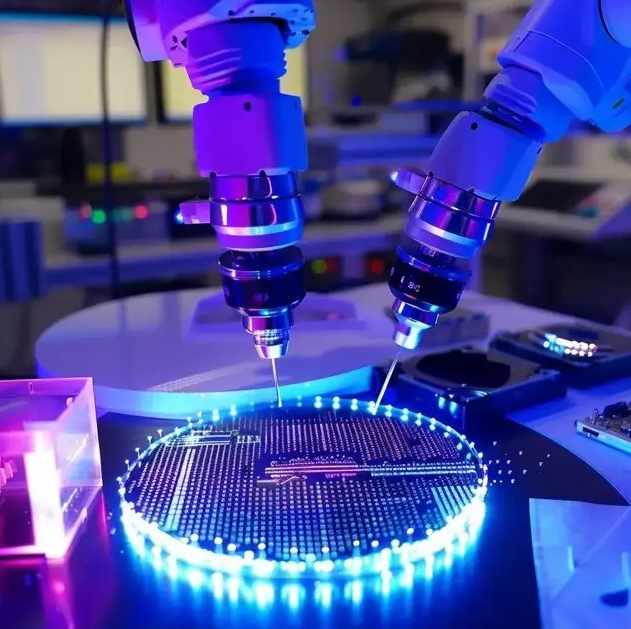
On the fab floor, thermal excursions never come with a warning label. You see them in drifting critical dimensions, sidewall striations, and photoresist that acts different from lot to lot. When the lamp starts to underperform, the thermal budget slips, and scrap quietly starts climbing. What matters, technically We built this RTP lamp for the fab around short-wave halogen emitters in a quartz assembly—because you need fast ramp rates and tight spectral control. The payoff is wafer-level uniformity within ±0.1°C across the process window, and repeatability that keeps bake profiles stable shift after shift. The system is engineered for cleanroom Class 1–100 operation. Zero particle generation, and a sealed thermal path that keeps outgassing from contaminating the chamber. It runs 24/7 without unplanned downtime, and the lamp output holds steady for 5,000+ hours with less than 5% drop. Why this matters where you live This lamp is a direct fit for lithography and photoresist processing. Soft bake and hard bake temperatures set adhesion, critical dimension, and profile control. When temperature control is tighter, you get fewer reworks, lower scrap, and more consistent line-end shortening. It also helps on the energy side. The lamp hits setpoint fast and holds it without overshoot, and stable thermal cycles reduce wafer stress while improving device performance. The result is higher yield, predictable uptime, and a lower cost per wafer. The details that make it work Installation is straightforward, but performance hinges on matching the tool’s socket and cooling interface. Double-check voltage and connector type, and confirm the chamber optics and sensor calibration are aligned to the lamp spectrum. Plan preventive replacement around your process duty cycle. Even with long life, scheduled swaps preserve uniformity and keep particle counts within spec.