
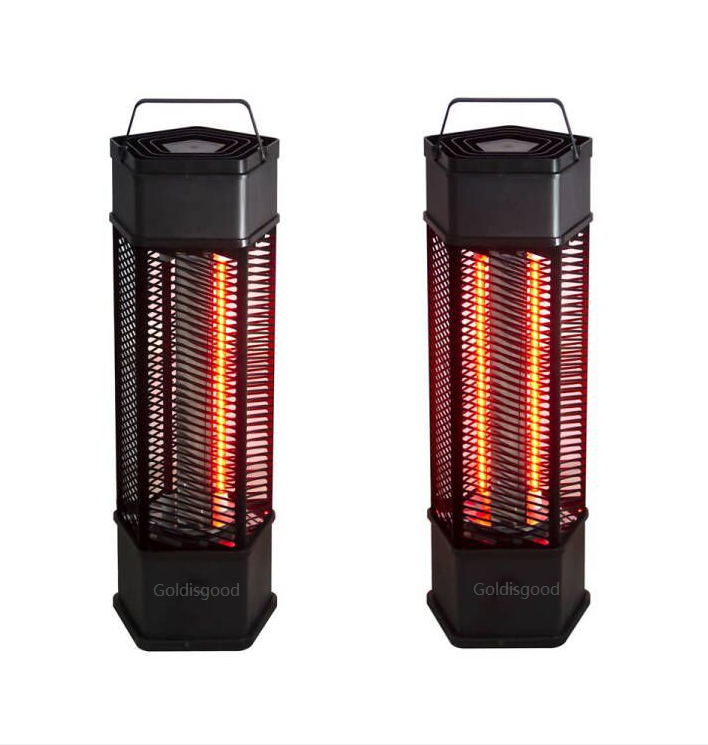
The Move Away from Old-School Bulb Heaters
Let’s talk bathroom heat—specifically, why those old radiant bulb heaters are fading fast. Here’s the thing: modern bathrooms are going for infrared, and it makes sense. You get focused warmth exactly where you need it, without the glare of a bright bulb or the worry of fragile filaments. And because these heaters are built to handle steam and moisture, they feel like a solid choice—whether you’re building new or upgrading an existing space.
Power, Voltage, and Size—Kept Simple
Infrared heaters are designed to fit real rooms and real wiring. Most plug into standard mains voltage—220–240V in many places, or 110–120V depending on your region. Power levels are matched to the room, often between 1500W and 2500W. The heating element stays compact, usually a quartz tube in the 300–600mm range. That small footprint is a big deal in tight bathrooms. It means you get high heat where you want it, the room warms up quickly, and you don’t have to stress about overloading circuits.
What’s Inside: Quartz, Coating, and Solid Connections
Quartz tubes are the backbone because they handle fast heating and cooling without losing performance. A reflective or selective IR coating pushes the warmth forward, so less heat is wasted sideways. Inside, a halogen gas fill helps keep the filament temperature steady, which supports long life. And the connections matter. R7s or Sk15 terminals are used because they stay secure at high heat—so even with vibration and expansion, things don’t loosen up.
Why It Shines in Bathroom Renovations
In a bathroom reno, infrared heaters feel different—in a good way. They don’t just warm the air. They send warmth straight to floors, fixtures, and the spots you actually stand on. The waterproof build is made for humid environments, which helps cut down on failures caused by moisture sneaking in. Installation is straightforward, too. The compact size makes it easy to swap out older heaters, and the quartz tube is tough enough for daily on/off use. Just keep in mind: because the heat is concentrated, you’ll want to plan spacing and ventilation carefully so surfaces don’t get too hot.