
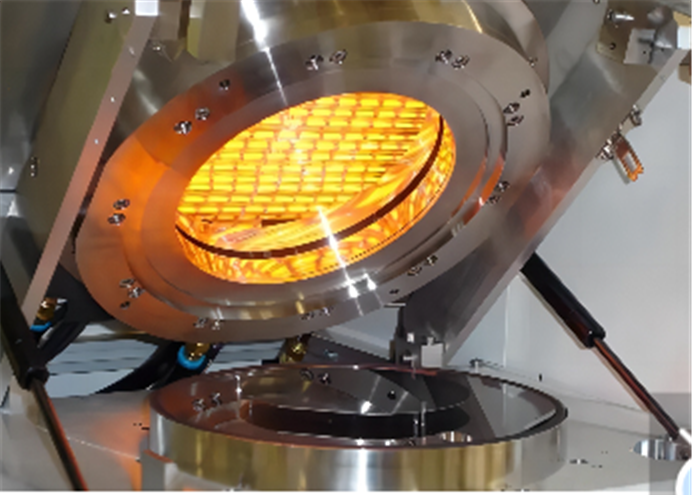
Stop Heating Your Machine and Start Heating Your Wafers
If you’ve ever worked with silicon wafers, you know the struggle. You need precise heat, but standard IR lamps are messy. They throw radiation everywhere. The problem is, that energy doesn’t just hit the wafer. It hits the inner walls of your equipment. Suddenly, your expensive chamber is acting like a giant radiator. It’s a waste of power, and honestly, it’s a safety risk. Nobody wants a machine that’s dangerously hot to the touch. How we fix the “bleed” We handle this by getting directional. Instead of just using a bare quartz tube and hoping for the best, we use specific reflector shapes and coatings. Think of it like a flashlight instead of a bare lightbulb. We force those infrared photons straight down onto the wafer. By tightening that beam, the energy stays where it belongs. Your wafer gets the heat. Your machine’s skin stays cool. Dealing with the intensity Now, high-wattage lamps are powerful. You need that punch to get your ramp-up times down, but it puts a real strain on your cooling. If your airflow or water loop isn’t up to the task, you’ll start seeing thermal drift. It’s frustrating. To stop that from happening, make sure your PID controller is tuned to the lamp’s actual response time. It keeps you from overshooting your target temperature. Getting it right on the floor Swapping these lamps in is easy enough, but here’s the catch:alignment is everything. If you’re off by even a few millimeters, you’ll get hot spots. That’s a nightmare for consistency. We use precision brackets to make sure the focal point hits the dead center of the wafer every single time. The best part? The “hot wall” problem just disappears. You can push your process to peak temperatures without worrying about frying your chamber seals or burning an operator. It just runs cooler, lasts longer, and keeps everyone safer.