
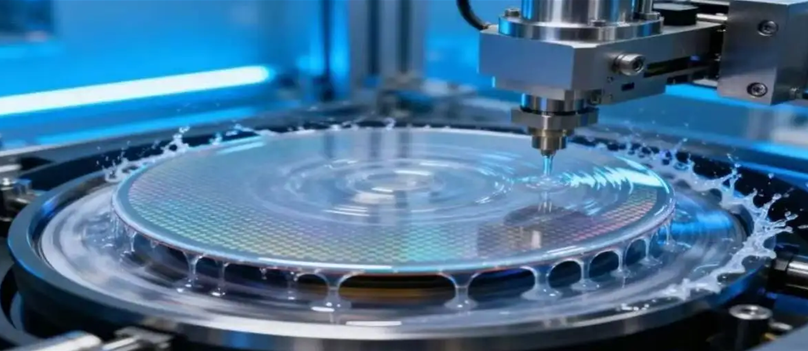
On the lithography floor, a soft bake that drifts even half a degree throws critical dimension control out of spec. Solvent retention in the photoresist gets unpredictable, and yield starts slipping. We designed our photoresist pre-bake infrared heaters to take that variability off the table. What matters under the hood We run short-wave infrared emitters with fast response and tight spectral control, so the thermal ramp is quick without overshoot. You get wafer-level uniformity of ±0.1°C across the bake surface, mapped and verified in production conditions. Cleanroom compatibility isn’t a tag line—the heater assembly meets ISO Class 1–100, with zero particle generation and outgassing held in check so film integrity stays intact. Repeatability holds within ±0.2°C bake to bake, which keeps your process window steady over thousands of wafers. Here’s why this matters in practice: soft bake and hard bake are all about delivering the right thermal budget, precisely. The infrared units cut cycle time while stabilizing residual solvent, which improves line-width uniformity and cuts down on rework. Energy use drops because we heat the target, not the chamber walls. Reliability is built for 24/7 fab life, with documented MTBF that supports long campaigns and fewer surprise stoppages. Installation comes down to aligning the unit to the process chamber and running a dedicated power circuit. The heaters work with standard wafer carriers and interfaces, but you still need to verify thermal coupling for each platform. Commissioning is short—ramp profiles get finalized, and uniformity maps are confirmed. Once it’s set, the process stays locked in.