

Don’t Let a Leaky Lamp Kill Your Bio-Sensor Yield
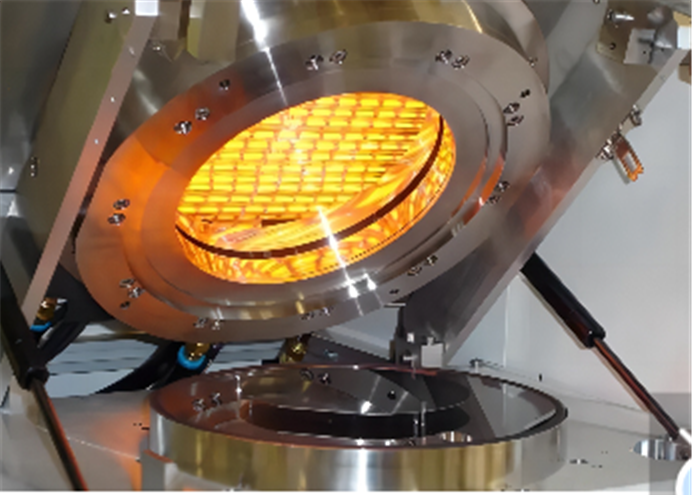
When you’re fabricating bio-sensors, you’re playing a game of precision. You need the heat to be exactly right. But here’s the problem: a tiny voltage leak or a flaky piece of insulation in your IR lamps doesn’t just pop a fuse. It ruins your substrate. It kills your yield. It’s a nightmare. That’s why we don’t gamble with our tubes. Every single lamp that leaves our shop goes through a 100% dielectric strength and insulation test. No exceptions. Why we obsess over insulation In a real fab line, things are crowded. Your IR lamps are usually squeezed into tight spots right next to conductive frames. If the insulation isn’t perfect, you get leakage current. To stop that from happening, we push every lamp through high-voltage stress tests. We’re looking for any weakness in the quartz envelope or the electrode seals. We do this so that when you plug it in, the power goes exactly where it belongs—straight into the filament—and stays far away from your machine chassis. The reality of high heat We build these lamps to ramp up fast and hit hard. That’s great for curing and drying your layers quickly, but that kind of heat is brutal on the hardware. The constant expanding and contracting—the “breathing” of the lamp—can create micro-cracks in the seals. You can’t always see them, but they’re there. Our pressure and insulation checks catch those flaws before they reach you. If a tube can’t handle the stress? We scrap it. Simple as that. Getting it set up Nobody wants a component to fail in the middle of a cycle. By verifying the dielectric properties of every unit, we take the guesswork out of your setup. Just a heads-up: we’ve done the hard work on the lamps, but you’ve still got to make sure your grounding system is up to the task. If your grounding is sloppy, it doesn’t matter how safe our lamps are—the whole system is at risk. Get your grounding right, and these lamps will do the rest.