
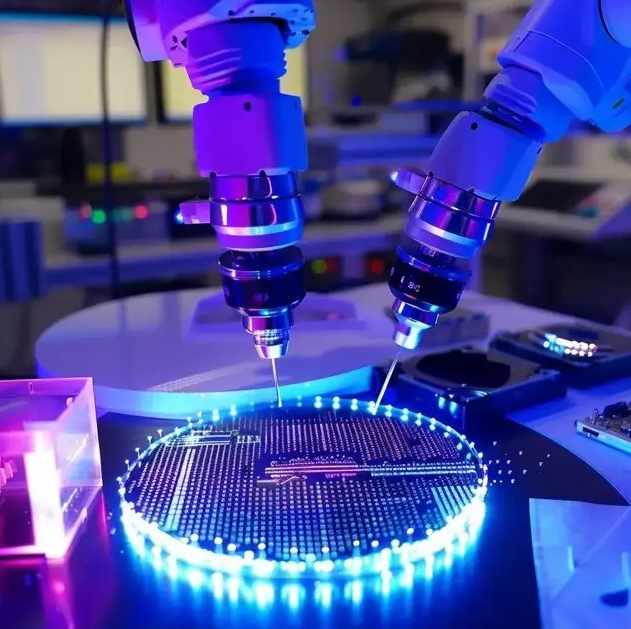
Getting Rid of Ozone in Semi-Conductor Curing
When you’re making semiconductors, “clean” isn’t just a preference—it’s the whole point. You need your drying and curing processes to leave absolutely nothing behind. No residue, no chemicals, nothing. The problem is that a lot of old-school heating methods just can’t keep up with today’s eco-friendly and lead-free rules. That’s where our ozone-free infrared (IR) lamps come in.
The Problem with “Standard” IR
Here’s the thing about standard short-wave IR lamps: they pump out radiation in the 185nm to 250nm range. When that hits the oxygen in your air, it creates ozone. In a cleanroom, ozone is a nightmare. It’s a contaminant that eats away at sensitive parts and makes the air unpleasant—even dangerous—for the people working there. We fixed this by using a special quartz envelope with a selective filter coating. Think of it like a shield. It blocks the VUV spectrum (the stuff that makes the ozone) but lets the thermal heat slide right through. You get all the warmth you need, but none of the chemical mess.
Fitting it Into Your Setup
These lamps pack a lot of heat into a tiny space. Since the energy moves via radiation instead of convection, you aren’t wasting time heating up the entire chamber. You’re just hitting the substrate. It’s a huge win for your energy bill. But a word of caution: keep an eye on your power density. If you’re running a high-wattage array to speed up your curing, things get hot. Really hot. Make sure your cooling fans and heat sinks can actually handle the load. If they can’t, you’re looking at cracked quartz or melted connectors, and nobody wants to deal with that on a Tuesday morning.
Real-World Use
We’re seeing people swap out their clunky old convection ovens for these lamps when curing solder masks or baking photoresists. It’s a simple swap. You don’t have to install those massive, expensive ventilation systems just to scrub ozone out of the air. You just wire it up, set your ramp-up time, and your substrate hits the right temperature in seconds. It’s cleaner, it’s faster, and it actually fits in with global green standards without making your life harder.