

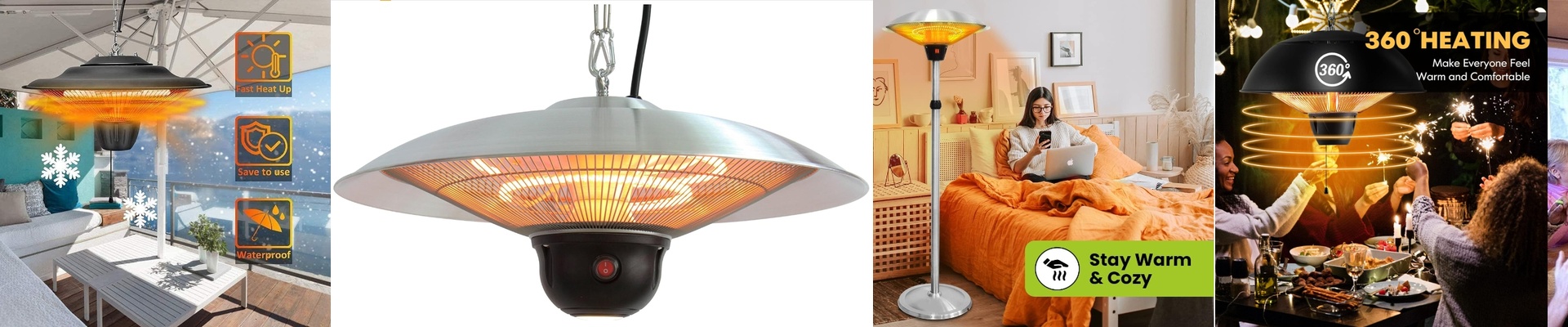
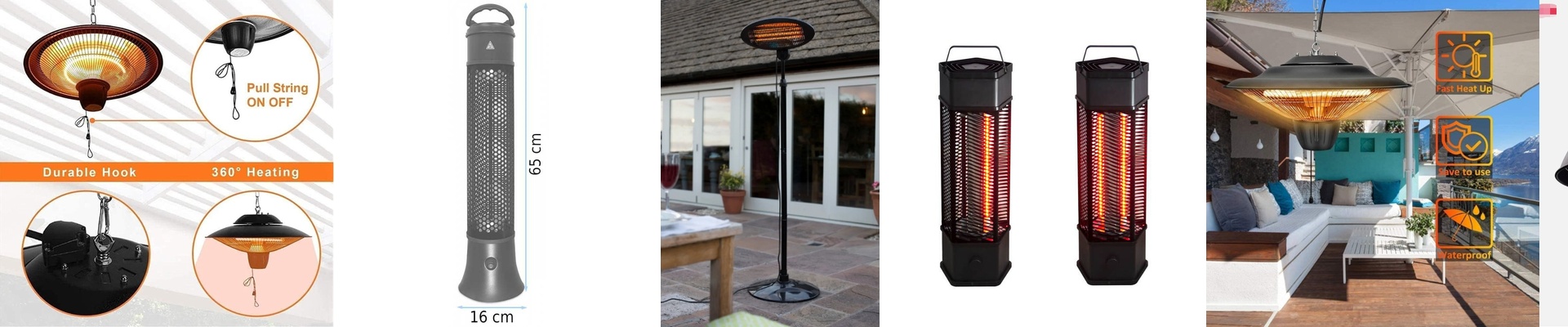


Why We Actually Care About the IP55 Rating for Your Patio Heater
Let’s be honest: outdoor heaters have a tough life. They sit out in the rain, get coated in dust, and deal with wild temperature swings. Most of the time, that’s a recipe for a short circuit. That’s why we built our units to the IP55 standard. It’s not just a spec on a box—it’s what keeps the thing from dying the first time it storms.
What “IP55” Actually Means for You
Here is the deal with those numbers. The first “5” is all about the dust. It keeps the grit and grime from settling on the internal wiring. Without that, you’ve got a ticking time bomb of short circuits. The second “5” is the important part for rainy days. It means the unit can handle water jets coming at it from any angle. We used sealed gaskets and tucked the heating tubes away in recessed housing. Why? Because if a splash of cold water hits that red-hot quartz glass, the glass can literally shatter from the shock. We’d rather the water slide right off.
Dealing with the Fog
Ever notice how outdoor gear gets that annoying fog inside the lens? It happens when the heater cools down in humid air. Moisture clings to the reflectors, and that’s where the trouble starts. Water droplets on a mirror create “hot spots.” Instead of a nice, even glow, you get concentrated heat that can burn out the lamp way too early. To stop that, we added anti-fog coatings and a few smart vents to keep the air moving. It keeps the reflectors clear and the heat steady.
The Trade-off (The Part Most Brands Hide)
Here is the catch. When you seal a unit this tightly to keep water out, you’re also blocking some of the natural airflow. Heat builds up inside the casing faster than it would in a “leaky” heater. Because of that,**give the unit some breathing room.**Don’t jam it right up against a wall or crowd it with decorations. If it can’t breathe, the internal capacitors run too hot, and that’ll eat away at the lifespan of your heater.
Real World Results
We’ve seen these things survive in coastal towns where the air is basically salt spray. That salt is a killer—it eats through electrical terminals on cheap heaters in a single season. But with the IP55 seal, the salt stays out. It’s a simple way of building things, but it’s the difference between a heater that lasts a few months and one that actually works year after year.