



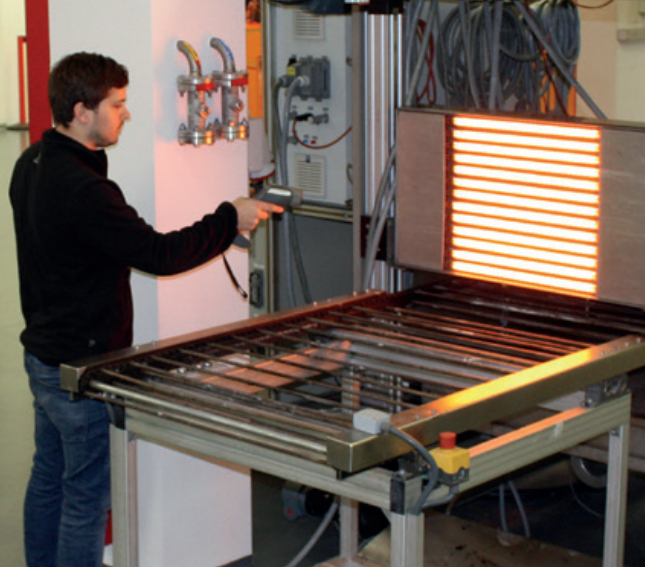
On the fab floor, a tool down isn’t just maintenance. It’s a yield and schedule hit. When a coat/bake module needs a hot-zone rebuild or a bond head gets pulled for rework, the wrong heat source can drift, shed particles, and bake contamination right into the hardware. That’s exactly why we built our infrared heaters for these moments. What matters, technically We run short-wave infrared emitters in a quartz assembly. The payoff is fast, directional heat with tight thermal control. Across the heated area, uniformity stays within ±0.1°C, and setpoint repeatability holds within a narrow band—critical when you have to re-establish photoresist bake profiles after service. The heater body is cleanroom-compatible across Class 1–100, with surfaces that keep particle generation and outgassing under control. In practice, that means you can run repair and qualification bakes without tripping particle alarms or burning extra qualification wafers. Why this works where you need it Wafer drying, photoresist soft bake and hard bake, packaging underfill/encapsulate cure, and post-clean drying all have an unforgiving thermal budget. Our infrared heaters come up to temperature fast, so you shorten bake time and claw back throughput. Tight uniformity cuts down on edge-to-center CD and thickness variation after litho bakes, and stable repeatability makes post-repair process qualification predictable. Fast response and low thermal mass keep energy use down, and the emitter life supports long service intervals—fewer spares, fewer change-outs. Here are the field notes Mounting and alignment matter. The heater has to match the tool’s hot-zone geometry, and you need verified clearance to avoid local hot spots. Output intensity scales with voltage, so confirm your supply is stable; line ripple and transients can show up as temperature jitter. Give yourself a short warm-up stabilization window before you lock in the photoresist bake profile.