
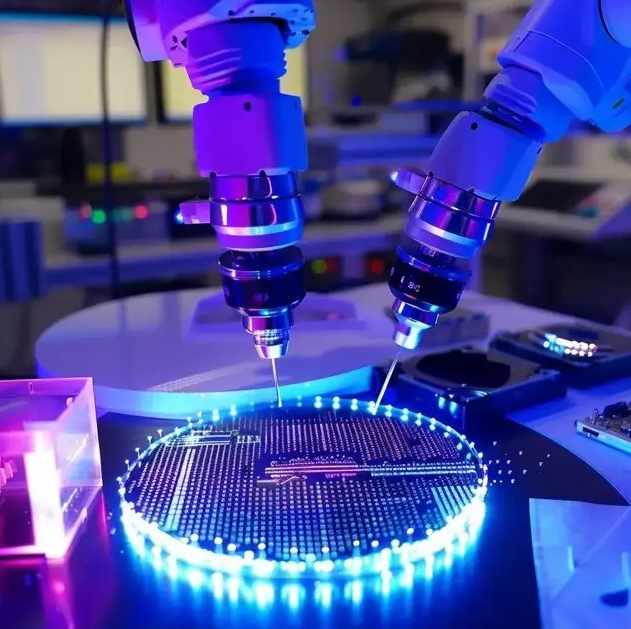
Stop Heating Your Machine and Start Heating Your Sensors
When you’re packaging semiconductors, heating the wrong part of your equipment is just a waste of money. It’s also a safety nightmare. Standard IR lamps are kind of messy—they throw heat in every direction. This means the inner walls of your expensive machines get hot enough to burn an operator or warp a sensitive part. We figured out a better way to handle this with directional heating.
How it actually works
Think of a standard quartz lamp like a lightbulb that just dumps energy everywhere. We change that. By using specific reflective coatings and precision reflectors, we squeeze that infrared energy into a tight, concentrated beam. It hits the sensor package exactly where it needs to. The rest of the chassis stays cool because the heat isn’t bouncing off the cabinet walls. You get the heat where the chemistry happens, and your technician’s hand stays safe.
The trade-offs you should know about
We designed these to fit into the tiny footprints of smart sensor lines. Since we use shortwave IR, the ramp-up is fast. If you’re running high-throughput packaging, that speed is everything. Plus, they plug right into your existing PLC controllers for easy temperature loops. But here’s the catch: when you focus heat this aggressively, the power density is intense. If your focal length is off by just a few millimeters, you might scorch the substrate. You’ve got to be precise with the distance between the lamp and the workpiece to avoid those nasty hot spots.
Why this makes life easier
The best part? You can stop relying on massive internal insulation or giant cooling fans just to fight “stray” heat. The ambient temperature inside the machine drops. Your electronics don’t bake themselves to death, and your operators don’t have to panic about touching a hot panel when they’re clearing a jam. It’s a simple way to make the shop safer without having to mess around with complex water-cooling jackets.